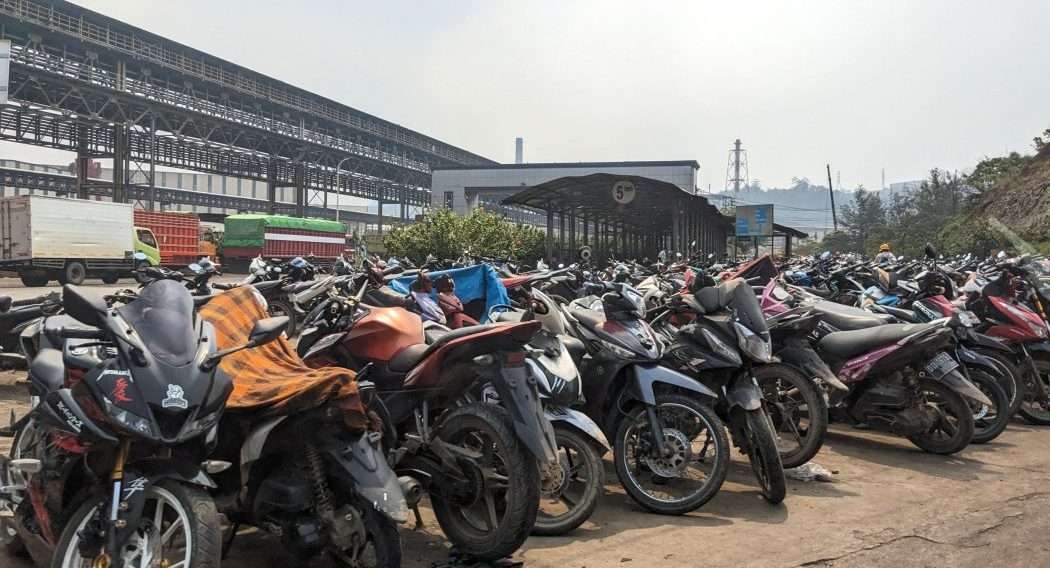

Work Accidents/Injury
1. A serious crowd-related stampede and structural collapse occurred at Section 9 of the Tsingshan Industrial Park in Indonesia. Footage from the scene shows a high concentration of people and chaotic conditions, ultimately resulting in a safety incident. In closed-management industrial parks, where large numbers of people are concentrated and living and working spaces overlap, inadequate crowd-control mechanisms and limited public space can intensify risks. Under prolonged high-intensity work and relatively monotonous conditions, emotional stress can build up. At certain trigger points—such as sudden announcements, mass releases, benefit distribution, or other coordinated events—crowd movement and heightened emotions can converge, leading to a sudden loss of control.
Any high-density industrial park must prioritize human capacity and safety. Protecting workers’ welfare, providing channels for emotional support, and ensuring that people can work with dignity are essential to preventing such tragedies.

2. At a Shandong Zhengtai construction site in the Morowali Industrial Park in Indonesia, a Chinese worker was injured, but his supervisor considered it a minor issue and did not arrange transportation to the hospital. In order to save money, the worker walked to the hospital himself and paid out of pocket for an examination, receiving only anti-inflammatory and pain medication. With no other option, he applied to return to China for further treatment, where he was diagnosed with a fractured rib. So far, he has not received any reimbursement or financial assistance from the company.
For fellow workers employed overseas, it is crucial to confirm whether your employer has purchased proper insurance coverage. In the event of an accident, be sure to protect and assert your legal rights.
3. Another worker fatality has occurred at the Tsingshan Industrial Park (IMIP) in Morowali, Indonesia.
On Friday, February 6, 2026, a workplace accident took place at the entrance of PT Maha Putra in Bahomoleo Village, Bungku Tengah District, Morowali Regency, Central Sulawesi. Two unloading workers were crushed to death when a stack of iron materials suddenly collapsed while they were unloading them from a truck. The victims were identified by their initials as M (35) and M.S. (25).
The company and police have not yet released further details. However, local authorities (Polres Morowali and Polsek Bungku Tengah) arrived at the scene to conduct an investigation, collect evidence, and transfer the case to the criminal investigation unit. The victims’ bodies were taken to Morowali Regional Hospital (RSUD Morowali).
AKP Muh. Irham, Chief of Bungku Tengah Police, stated that the situation at the scene has been brought under control and urged the victims’ families to remain calm and allow the authorities to handle the case. He also reminded companies and workers that occupational safety and health (K3) standards must be prioritized when handling heavy loads to prevent similar tragedies.
4. On January 4, at the Tsingshan Industrial Park (IMIP) in Morowali, Indonesia, a Chinese worker was struck and run over by a truck and died at the scene.
According to reports:
“At approximately 13:30, the driver was operating a vehicle with license plate LSI 040 DT. Due to traffic congestion ahead, an unidentified employee instructed him to reverse. While reversing, a Chinese worker was walking behind the vehicle. By the time he realized what was happening, he had already been knocked down by an IMIP security officer who was on standby near the PT IAI gate area. The security officer immediately secured the scene.”
The driver, identified as Kevin (23), an employee of PT BMW, was detained by local security personnel. As of now, neither PT IAI nor PT BMW has released any official statement regarding the incident.
5. The deceased was a 55-year-old Chinese national working for China MCC22 Group (China Metallurgical Group Corporation 22nd Construction Co., Ltd.) at its project site in the IMIP Tsingshan Industrial Park in Indonesia. It is reported that compensation of approximately RMB 1.8 million was paid.
6. At 14:00 on February 1, a fire broke out at a Chinese-invested bauxite company located in Ketapang, West Kalimantan, Indonesia. The blaze was intense, though no casualties have been reported so far.
The company involved is PT Borneo Alumindo Prima (PT BAP), part of a bauxite smelting project operated by Hangzhou Jinjiang Group in the Pagar Mentimun area of Ketapang.
Previously, on October 5, 2025, a construction formwork collapse occurred at the PT BAP site during rainy conditions, resulting in the death of a Chinese worker.
This incident underscores the need for Chinese-invested enterprises to strengthen production safety measures and ensure the protection of workers’ lives and health.
Hangzhou Jinjiang Group has invested in a large integrated industrial park in Indonesia, including bauxite mines, an alumina industrial park, a waste-to-energy power plant, and port facilities. The project is designated as a national strategic project of Indonesia and is considered a key node under China’s Belt and Road Initiative.
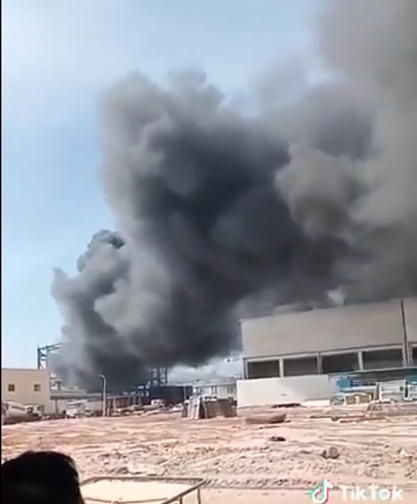
7. At the office of a Chinese-invested engineering project in Algeria, the roof suddenly collapsed, exposing the open sky above. A worker joked, “Did we get shelled last night?” The remark, though made in jest, carried a hint of bitter humor.
8. As of the latest update on January 21, the explosion at the Baogang Rare Earth Steel Plate Plant in Inner Mongolia has resulted in 10 deaths and 84 injuries. May the victims rest in peace.
Following full-scale search and rescue efforts and official verification, authorities confirmed that the eight previously missing individuals have been found with no signs of life. In total, the accident has caused 10 fatalities and 84 injuries. The injured are still receiving medical treatment, and the cause of the explosion remains under investigation.
9. On January 18, at a construction site in Ashdod, Israel, a Chinese worker from Tai’an, Shandong Province, was working in the rain when the ladder he was using to tie rebar collapsed. He fell from a height along with the external structure and died from the fall.
The worker was just ten days away from completing his contract and returning home, but the accident occurred in his final days abroad.
In Israel and in many other countries, construction sites often lack external scaffolding protection. Fellow workers are strongly urged to pay close attention to safety measures and take proper protective precautions to prevent similar tragedies.
10. On January 14, at a construction site in Kai Tak, Hong Kong, a 66-year-old worker was fatally injured while carrying out plastering work using a powered work platform. He was trapped between a door frame and a railing and later died after being taken to the hospital.
The Labor Department is investigating the cause of the accident and has issued a suspension notice to the contractor.
11. A fire broke out at the Ogun–Guangdong Free Trade Zone in Nigeria, causing severe damage to a Chinese-owned factory.
On January 11, a fire occurred in the Ogun–Guangdong Free Trade Zone located in Igbesa. According to Nigeria’s Daily Post, the blaze was reportedly triggered by a gas explosion at a foam manufacturing company within the zone.
The industrial park is a key China–Nigeria joint venture project, led by Chinese (Guangdong-based) enterprises. More than 90% of the businesses operating in the zone are Chinese-owned light manufacturing companies, including furniture, building materials, and foam product manufacturers. Multiple media outlets described the affected company as a “Chinese-owned foam and mattress-producing company.”
12. On January 14, a fatal industrial accident occurred in Tsuen Wan, Hong Kong. A crane’s lifting cage was suspected to have opened, causing gas cylinders to fall and strike workers on the ground, resulting in one death and two injuries.
According to HK01, the incident took place at a construction site on Po Fung Road in Tsuen Wan. Preliminary police investigations found that three rebar workers were working at the time. A crane was lifting a metal cage containing three compressed gas cylinders, locally known as “fung mui chun” (industrial gas cylinders commonly used for welding or cutting work).
Reports state that a 29-year-old worker surnamed Chan suffered a severe head injury and was pronounced dead at 2:40 p.m. after being taken to hospital. A 40-year-old worker surnamed Sze sustained serious injuries, including a fractured thoracic vertebra, and remains in the intensive care unit. Another 50-year-old worker suffered a foot injury while attempting to dodge the falling cylinders and sustained relatively minor injuries.
Police said that two of the fallen cylinders measured approximately 153 cm in length and 21 cm in width, while the third measured about 100 cm by 25 cm. Workers at the scene reported hearing a loud crash before discovering that colleagues had been struck.
The Hong Kong Labour Department dispatched officers to the site immediately to investigate the cause of the accident. The Hong Kong Industrial Accident Victims’ Rights Association expressed grief and anger over the incident, noting that this was the second serious lifting-related industrial accident within three days. The group questioned whether adequate risk assessments had been conducted before work began and why workers were still present on the ground during lifting operations, urging authorities and contractors to provide a full explanation.
13. The 100MW photovoltaic project in Wenxi, Shanxi Province, was subcontracted through five layers, resulting in a loss of effective labor management and oversight.
Migrant workers were employed from November 2024 until the project was suspended in June 2025. Their wages remain unpaid to this day, despite multiple attempts to seek redress. During construction, safety measures were reportedly inadequate. One worker died in a fall, and compensation for the fatality as well as several other workplace injuries has yet to be settled.
The companies involved have allegedly deflected responsibility on the grounds that the project has not been completed, while regulatory oversight appears to have been insufficient. As a result, both the workers’ hard-earned wages and their fundamental right to life and safety have been left unprotected.
14. An Indonesian steel factory has been exposed for using scrap equipment contaminated with radioactive cesium-137. During the steelmaking process, the radiation was effectively “melted out,” affecting several nearby factories. Some exported products were even recalled from the United States as a result.
Police have now named a Chinese executive of PT PMT as a suspect and are investigating the entire scrap supply chain.
The incident highlights serious weaknesses in scrap metal recycling management. When oversight is inadequate, the risks can spread widely—potentially implicating multiple companies along the supply chain.
Enforcement
– Immigration
1. Thailand continues to crack down on foreign nationals working illegally.
On February 13, immigration authorities conducted a surprise inspection at a construction site in Samut Prakan Province, south of Bangkok, and arrested several undocumented workers.
The frightened and helpless expressions on the workers’ faces were deeply distressing. We urge the companies involved to operate in full compliance with the law, ensure that proper work visas are obtained for employees, and protect workers’ basic rights and legal status.
2. Today, a large number of police officers were deployed to Santiago’s Chinatown in Chile to carry out a major inspection and enforcement operation targeting businesses and workers.
We remind overseas workers that it is essential to hold valid legal residency and work status when working abroad.
3. Immigration authorities in Cirebon, West Java, Indonesia, have detained eight Chinese nationals on suspicion of working illegally.
On January 26, following reports of suspicious activities involving several foreign nationals at a workplace in Depok Subdistrict, Cirebon, immigration officers carried out an enforcement operation. After examining their travel documents, authorities found that all eight individuals had entered Indonesia in mid-January on visa-on-arrival permits and were engaged in construction work and equipment operation.
The eight Chinese workers were identified by their initials and ages as follows: FZ (41), HL (64), JL (30), JJ (42), WY (53), YX (48), YL (47), and KL (44).
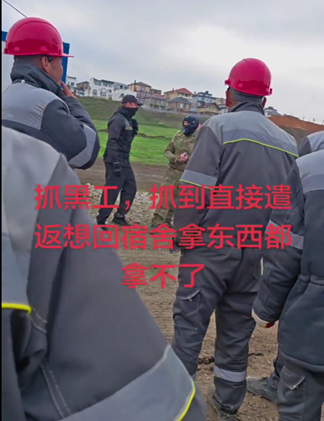
4. Russian police and immigration authorities have been conducting on-site inspections at construction sites to identify undocumented workers. Those found working illegally are taken away and deported immediately.
More realistically—and more harshly—workers who are deported often have no opportunity to settle their unpaid wages or overtime compensation. With little access to effective remedies, they are left to bear the financial losses themselves.
For those seeking employment abroad, it is essential to obtain a valid work visa and legal status in order to avoid disputes and protect your rights.
5. On January 20, Thai Prime Minister’s Office spokesperson Areepen Phanrit announced that the government had officially launched a special campaign targeting illegal migrant labor. The initiative adopts a strategy of “strict border control and rigorous internal inspections,” with severe penalties to be imposed on both undocumented foreign workers and their employers.
On the same day, authorities inspected two construction sites and found 10 Chinese workers employed without valid work permits.
6. On January 20, in Chonburi Province south of Bangkok, Thai immigration authorities carried out a surprise inspection at a GDS (GDS Holdings) construction site, prompting Chinese workers to scatter and flee.
Many of the Chinese workers engaged in infrastructure construction at the site were reportedly working on tourist visas in violation of Thai labor laws. If apprehended, they could face fines and deportation.
At the end of 2024, GDS announced a USD 1 billion investment and signed a cooperation agreement with Amata, a Thai industrial estate developer and operator, for a project located in Chonburi Province.
7. On January 19, 23 Chinese workers returning from South Africa were reportedly stopped by customs authorities due to irregularities in their documentation. It was said that they were only allowed to depart after their employer paid fines amounting to several hundred thousand RMB.
When working abroad, maintaining legal and compliant immigration status is crucial. It not only protects workers’ basic rights, but also helps employers avoid significant penalties resulting from violations.

8. Mainland Chinese individuals suspected of working illegally in Hong Kong.
On January 15, Hong Kong’s Immigration Department arrested five mainland Chinese renovation workers in Sheung Shui for allegedly working illegally while holding visitor (tourist) status.
9. Working in Thailand can feel like “running a race” with immigration authorities every day.
On January 13, at a Qinhuai data center construction site in Chonburi, Thailand, immigration officers in plain clothes conducted an on-site raid. One Chinese worker who was apprehended reportedly attempted to resist and flee, but complied after being confronted at gunpoint.
Obtaining a Thai work visa can be difficult, and many construction workers reportedly enter on tourist visas and work in violation of immigration rules. Without proper legal status, they face the risk of arrest during inspections. Some workers have said they had to “run” from immigration checks up to three times in a single day.
10. Vietnam’s legal framework for protecting workers’ rights continues to improve.
On January 8, Germton, a Chinese-invested company in Da Nang, was fined 150 million Vietnamese dong for violations including exceeding the legal annual overtime limit and improperly reassigning employees.
Even if workers had verbally agreed to these arrangements, such consent does not exempt the company from penalties. Vietnam’s labor inspections are now increasingly based on strict application of statutory provisions, and companies must comply fully with labor laws in order to mitigate legal risks.
11. On January 6, in Chonburi Province, Thailand, immigration officers in plain clothes conducted a surprise inspection at a construction site and detained six Chinese workers for overstaying their visas.
The site supervisor reportedly gathered money overnight to pay fines at the immigration office in order to secure their release, with each worker fined 100,000 Thai baht.
Working with proper legal status not only protects the rights of overseas workers, but is also a necessary condition for employers to operate in compliance with the law.
12. On January 1, 2026, while people across Thailand were celebrating the New Year, immigration authorities carried out a surprise inspection in the Rayong industrial zone near Pattaya. Chinese workers reportedly scattered and fled upon seeing the officers. Most were said to have entered Thailand on tourist visas and were working illegally.
13. On December 27, authorities in Hung Yen Province, Vietnam, intensified inspections targeting foreign nationals without work permits, with most of those involved identified as Chinese workers. A total of 40 violators were fined a combined 800 million Vietnamese dong, and two companies were also investigated and penalized.
14. On December 23, the Labor Office in Chonburi Province, Thailand, discovered 15 Chinese nationals and one Cambodian national working illegally at a construction site. The individuals were handed over to the police for further legal action.
15. According to a December 20 report by Huarenjie (Italy), in a crackdown on labor exploitation, two business owners were arrested for employing 13 undocumented workers. The total fines amounted to €110,000. The two companies were found to have extensively used illegal labor and were ordered to suspend operations, with multiple violations pursued. One of the arrested individuals was banned from engaging in any professional or business activities for one year.
16. Recently, the Banten Immigration Office in Indonesia released data on immigration violations in 2025. Authorities processed 899 foreign nationals for violations, deported 261 individuals, barred 253 from re-entering Indonesia, and detained 181 others. Most of the violators were Chinese workers, many employed by foreign-invested enterprises in Tangerang. The Tangerang Immigration Office reportedly collected 138 billion rupiah in non-tax revenue (fines).
We urge Chinese-invested enterprises to comply with local laws and ensure proper work permits are obtained for Chinese workers.
17. Authorities in Chonburi Province, Thailand, conducted a surprise inspection at a construction site, resulting in the arrest of 10 Chinese workers for illegal employment.
Following a public complaint, officials from the Foreign Workers Control Division, the Chonburi Provincial Labor Office, and the Internal Security Operations Command jointly carried out a raid at a construction site in Ban Kao Subdistrict, Phan Thong District.
During the inspection, officers found 10 Chinese men engaged in construction work without valid work permits, in violation of Thailand’s Foreign Workers Management Act. All 10 individuals were arrested at the scene and transferred to Phan Thong Police Station for further legal proceedings.
18. South Africa is addressing labor law non-compliance among certain Pakistani- and Chinese-owned shops.
South Africa’s Minister of Employment and Labor, Nomakhosazana Meth, stated that the department is strengthening enforcement of labor laws with a focus on non-compliant practices in some shops operated by Chinese and Pakistani nationals, in order to safeguard the legal rights of South African workers.
Some employers have reportedly attempted to circumvent labor regulations by hiring undocumented foreign workers and paying wages below the national minimum wage. Such practices are said to be particularly prevalent in sectors such as trucking and logistics.
Minister Meth emphasized that the department will continue cracking down on the employment of undocumented foreign workers to evade minimum wage laws through proactive inspections, complaint-driven investigations, and high-impact joint enforcement operations.
19. UK police conducted a surprise inspection at the Kempton Park Christmas Market, uncovering illegal employment and arresting 11 men of Indian, Iraqi, and Chinese nationality.
Of those arrested, five were detained pending deportation, while six were released on immigration bail.
The operation was carried out jointly by immigration enforcement officers, local police, and organized crime units. Officials stated that over the past year, approximately 11,000 enforcement raids have been conducted, resulting in more than 8,000 arrests of undocumented workers—marking a record high level of enforcement activity.
20. South Korea’s Ministry of Justice is investigating China’s Mingtai Aluminum for allegedly using D-8-1 investment visas to “regularize” dozens of Chinese workers and assign them to production positions at its Gwangyang factory. The D-8-1 visa is intended primarily for executives and managerial personnel. Mingtai had previously pledged to prioritize hiring local Korean workers in exchange for tax incentives. It now faces the possibility of losing those benefits, administrative penalties, and reputational damage in South Korea if found to have circumvented labor regulations.
21. Illegal migration activity in Thailand’s Golden Triangle region has reportedly resurged. Local immigration authorities intercepted seven foreign men near the Mekong River—six Chinese nationals and one Rwandan national—none of whom possessed valid documentation. They are suspected of illegal entry and unlawful stay in Thailand.
– Scam Compounds & Human Trafficking
1. Latest update: Journalists arrested in Cambodia amid reporting on scam compounds.
Between February 3 and February 12, 2026, four journalists in Cambodia were detained within just ten days for reporting on issues related to telecom fraud and human trafficking. Three were released after reportedly “admitting wrongdoing and deleting photos and reports,” while Hem Vanna remains in detention.
Although Cambodia pledged in January to crack down on scam compounds, the detention and intimidation of journalists covering these issues have raised questions about the credibility, commitment, and transparency of the government’s anti-scam campaign.
2. Thailand has been playing an important role in efforts to dismantle scam compounds operating in Cambodia. Following Thailand’s recent elections, Thai authorities again urged Cambodia to eliminate online fraud operations. On the night of February 11, several artillery rounds were reportedly fired in border areas, widely interpreted as a warning signal prompting scam operators to evacuate.
Large numbers of Chinese nationals described sarcastically as “high-tech talents” reportedly fled the compounds overnight, triggering a wave of departures. The sudden exodus led to a severe shortage of transportation, with reports of more than a dozen people crammed into modified motorized tricycles—an episode some observers described as a surreal “transport miracle” amid the chaos.
3. The Philippine Bureau of Immigration deported 23 Chinese nationals on Friday for allegedly participating in illegal gambling and online fraud operations. The action followed the implementation of a revised anti-gambling law that imposes stricter penalties and grants broader enforcement powers to the government.
According to immigration authorities, the individuals were expelled for violating immigration laws, engaging in gambling-related scam activities, and being wanted by Chinese authorities. They departed from Manila’s Ninoy Aquino International Airport on a flight bound for Shanghai.
The Commissioner of Immigration stated that enforcement efforts will continue and that more foreign nationals involved in similar activities are expected to be arrested and deported in order to safeguard national security.
4. Crackdown on Transferred Scam Operations: 17 Chinese Suspects Arrested in Bangkok
According to Thailand’s Immigration Bureau, authorities recently carried out a raid at a hotel in Bangkok’s Lat Krabang district, arresting 17 Chinese nationals suspected of involvement in illicit “gray industry” activities.
Police stated that as multiple countries intensify joint crackdowns on scam networks in Cambodia and elsewhere, some individuals connected to these operations have begun relocating to other countries or using third countries as transit points to reorganize their activities. The suspects were found staying in unusually concentrated numbers at the same hotel, which raised suspicions and prompted the inspection and arrests.
Preliminary investigations indicate that the individuals may have entered Thailand illegally through natural border crossings in Sa Kaeo Province. Authorities have formally charged them with unlawful entry and unauthorized stay in Thailand, and investigations are ongoing to trace the smuggling routes and networks behind the operation.
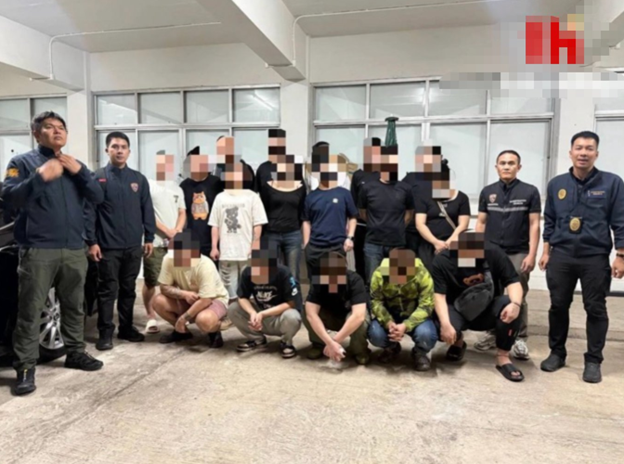
5. Seven Police Officers Arrested After Alleged Extortion Raid Involving Cryptocurrency Transfer
Late at night on February 5, 2026, a serious case of alleged police-linked extortion occurred in Kajang, Selangor, Malaysia. Seven serving police officers, allegedly acting in collusion with five accomplices, reportedly entered a double-story detached house in the Greenview Garden residential area. They were said to be wearing police reflective vests and presenting official identification. Eight Chinese tourists were inside the residence at the time.
According to investigations, the suspects accused the occupants of being involved in scam operations in Cambodia, intimidated them, and forcibly inspected and copied data from their mobile phones and computers. Through a translator, they allegedly demanded RM400,000 as a “settlement payment,” threatening to hand the individuals over to immigration authorities if the money was not paid.
One of the victims, fearing for the safety of the group, contacted an employer in China to raise funds and transferred approximately RM200,000 (over RMB 300,000) via cryptocurrency as instructed. Even after receiving the payment, the suspects allegedly threatened the victims again, demanding that they vacate the residence within two days or face further action.
The case was swiftly uncovered after the victims filed a police report. CCTV footage from the residential security post reportedly showed the suspects arriving in official police vehicles.
In the early hours of February 7, Kajang police arrested the seven officers involved, including a sergeant major, corporals, and rank-and-file officers, with the most senior having 27 years of service. The case is being investigated under Section 395 of the Penal Code (gang robbery), with particular focus on abuse of official authority and cross-border cryptocurrency-based extortion.
6. Chinese Ringleader in $7.36 Billion Cambodia-Linked Crypto Scam Sentenced to 20 Years in the U.S.
On February 9 (local time), the U.S. District Court for the Central District of California sentenced Daren Li (Li Daren), 42, a dual national of China and Saint Kitts and Nevis, to 20 years in prison, followed by three years of supervised release, for his role in a global cryptocurrency investment fraud and money laundering scheme involving approximately $7.36 billion. The sentence was issued in absentia.
The court found that Li was a core member of a criminal network that established scam centers in Cambodia. The group used social media, phone calls, text messages, and online dating platforms to target victims in the United States and other countries with “crypto investment” and romance-related fraud schemes, directing them to fake trading platforms or fabricating technical issues to steal funds.
Li admitted that at least $7.36 billion in victim funds flowed into accounts he controlled or was associated with. Approximately $5.98 billion was laundered through U.S.-based shell companies and converted into virtual currencies to obscure the source of the funds. He also directed the creation of shell companies in the United States to facilitate cross-border fund transfers. During court proceedings, Li cut off his electronic monitoring device in December 2025 and fled; he remains at large.
To date, eight co-conspirators have pleaded guilty. Li is the first key figure to be sentenced for directly controlling victim funds. The U.S. Department of Justice stated that it will continue working with international law enforcement partners to seek his extradition and to combat global scam compounds, cryptocurrency fraud, and transnational money laundering. The case was led by the U.S. Secret Service, with coordination among multiple domestic and international agencies.
7. 319 Chinese Nationals Suspected of Online Fraud Deported by Chartered Flight
On February 9, Cambodian authorities, in coordination with the Chinese Embassy in Cambodia, deported 319 Chinese nationals suspected of involvement in transnational online fraud and high-tech crimes.
The operation was described as part of a broader crackdown on scam compounds across Cambodia. According to Cambodia’s Ministry of Interior, the campaign aims not merely to “combat” online fraud, but to “eliminate” it entirely, with an official target of eradicating scam operations by the end of March.
8. At a concealed location approximately 35 kilometers from a village in Mengya Township, northern Myanmar, local authorities uncovered another scam operation involving Chinese nationals.
A total of 330 Chinese nationals were apprehended at the site, including 321 men and 9 women. The compound was deliberately established in a remote area, far from urban centers, with strong concealment measures.
The quantity of seized equipment was substantial: 208 mobile phones, 86 desktop computers, 7 laptops, and 23 Starlink satellite internet devices. Authorities also confiscated 4 off-road vehicles, 3 Toyota Land Cruisers, 1 TWK vehicle, and 2 additional vehicles of other models, along with 2 large generators and 25 tents used for temporary structures.
Based on the setup, the site functioned as a fully operational “remote wilderness version” of a scam production line—tents serving as offices, generators supplying electricity, and Starlink providing internet connectivity.
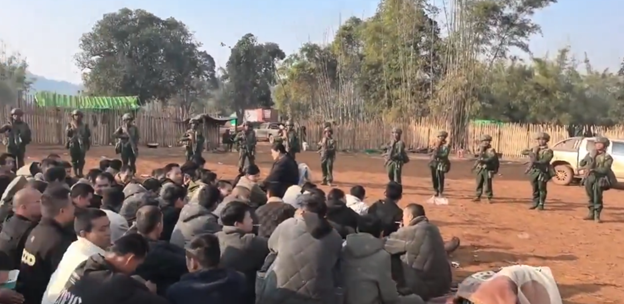
9. In Phnom Penh, Cambodia, as the crackdown on scam operations continues, several compounds have been shut down and large numbers of individuals allegedly involved or associated with the operations have been placed under centralized supervision.
Images show dozens, even hundreds, of foreign nationals and Chinese individuals being held in temporary facilities—sleeping on the floor, crowded together, and living in rudimentary conditions. Their future remains uncertain. Although the compounds have been closed, many of the people inside have not been able to leave immediately, leaving the pressing question hanging over them: “What happens next?”
10. According to a February 2 report by Reuters, the Thai military escorted foreign journalists to visit the O’Smach complex in Cambodia, identifying it as a former base for scam operations allegedly linked to human trafficking, forced labor, and forced criminal activity.
In an interview with Reuters, Cambodian Interior Ministry spokesperson Touch Sokhak stated that the Cambodian government has designated the fight against telecom and online fraud as a national law enforcement priority. “Cambodia is carrying out strong enforcement actions and has made a clear commitment to completely eradicate telecom fraud and related illegal industries by April this year,” he said.
11. Crackdowns on scam operations in Cambodia continue, while some Chinese suspects have reportedly turned to kidnapping and extortion.
Arrest at the scene: Phnom Penh police successfully rescued a Cambodian woman who had been unlawfully detained at a Monivong apartment and arrested a Chinese suspect on the spot.
According to police investigations, the suspect confiscated the woman’s mobile phone and demanded a ransom of USD 5,000 from her family. After the family reported the incident, authorities acted swiftly to carry out the arrest.
12. Police from Thailand’s Anti-Online Scam Operations Center arrested three Chinese suspects who were hiding in a rental apartment in Bangkok’s Thon Buri district. The individuals were apprehended and detained at the scene.
During questioning, the suspects reportedly admitted that they had previously worked for scam syndicates in Myanmar. Following large-scale crackdowns there, they allegedly crossed illegally into Thailand through the Mae Sot area in Tak Province. They had been hiding in the apartment while planning to move onward to a third country when authorities located and arrested them.
13. Following Cambodia’s intensified crackdown on scam compounds, large numbers of released individuals have reportedly flooded into the streets of Phnom Penh, Sihanoukville, and other cities.
Many of them lack valid documentation, stable income, or clear destinations. Stranded and wandering, some are surviving on ad hoc assistance, raising concerns about public order and security risks.
Although the government has convened meetings to advance the crackdown and coordinate repatriations, short-term arrangements for accommodation and orderly management appear to be lagging. The resulting governance gap has become increasingly visible, posing a significant test for authorities’ capacity to manage the aftermath.
14. On the evening of January 7, Cambodia’s Ministry of Interior announced the arrest of three individuals—Chen Zhi, Xu Jiliang, and Shao Jihui—and confirmed that they had been extradited to China.
Previously, on October 14, 2025, the U.S. Department of Justice charged Chen Zhi with operating what it described as a “massive online fraud empire,” allegedly orchestrating a series of large-scale cryptocurrency scams and engaging in conduct that included elements of forced labor.
15. Thailand’s Immigration Bureau recently arrested 14 Chinese nationals for illegal entry at a boutique hotel in Bangkok.
Police investigations found that the individuals had fled Myanmar amid intensified crackdowns on scam syndicates. They allegedly crossed illegally into Thailand through Mae Sot District in Tak Province and had been hiding in Bangkok for an extended period. After surveillance and preparation, authorities conducted a raid and apprehended all 14 suspects inside hotel rooms, where three to four people were reportedly staying in each room.
Upon verification, three individuals were found to have overstayed their visas, four had no legal record of entry into Thailand, and seven were unable to present any identification documents. The suspects reportedly admitted that they had entered Thailand to evade Myanmar authorities and were planning to travel onward to a third country.
All 14 individuals have been handed over to relevant authorities on charges including illegal entry and visa overstay.
16. Online reports citing Karen military sources claim that multiple new scam compounds have been established near the Three Pagodas Pass area in Kyain Seikgyi Township, Karen State, Myanmar. The compounds are reportedly housing individuals transferred from Myawaddy, with estimates suggesting that nearly 5,000 Chinese nationals may be involved.
According to these accounts, the sites are under armed guard and operate under closed management, with scam activities having resumed. The compounds are said to include facilities such as karaoke venues, clinics, and shops. Scam operations allegedly pay fees to the DKBA (Democratic Karen Benevolent Army), and portions of workers’ earnings are reportedly withheld.
Local sources further allege that the compounds involve human trafficking, forced participation in scam activities, and abuse. These claims have circulated online and have not been independently verified.
17. Following the extradition of Chen Zhi to China, large numbers of individuals have reportedly fled scam compounds in Cambodia.
Amnesty International stated that, after verifying videos and social media content, it identified signs of departures or escapes from at least 10 scam sites. However, it remains unclear whether law enforcement authorities were directly involved in facilitating the releases.
The organization expressed concern over the lack of proper arrangements and assistance for those who have left the compounds. Some individuals were reportedly seen seeking help on the streets. Without adequate support and protection, there are fears that they could be resold or transferred to other scam operations.
Wage Arrears
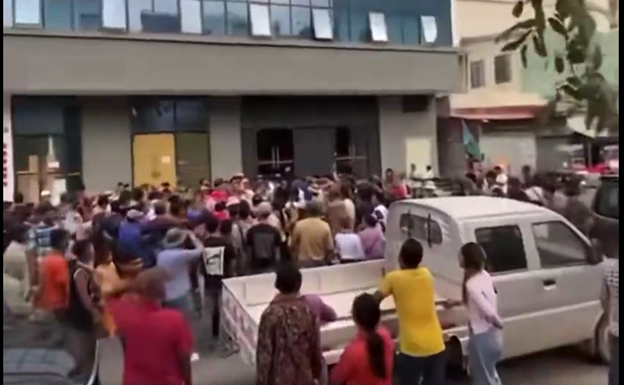
1. On February 11, hundreds of construction workers in Sihanoukville, Cambodia, gathered and blocked roads to demand unpaid wages.
The dispute is linked to the Yuehai Bay project, described as Cambodia’s first high-end residential development built to “fourth-generation housing” standards.
#WageArrears #Sihanoukville #ConstructionWorkers
2. At the IPIP Industrial Park in Indonesia, a laterite nickel production base led by Huayou Cobalt, workers reportedly work without days off. After a standard 9-hour shift, they are required to continue with an additional 4 hours of overtime.
According to attendance records, day shifts run from 7:00 a.m. to 10:00 p.m., while night shifts run from 10:00 p.m. to 7:00 a.m. the following day.
Despite these long hours, workers reportedly still face wage arrears. Where is the dignity of labor under such conditions? It raises the question of whether the promises of development and progress extend to the workers on this red soil.
3. The eight-hour workday represents a historic compromise between business efficiency and workers’ dignity.
In 1919, the International Labor Organization (ILO) adopted a convention formally recognizing the eight-hour workday within an international legal framework.
More than a century later, critics argue that under certain Belt and Road project models, this standard is being undermined, with reports of excessive working hours and widespread wage arrears. Such practices, they contend, run counter to established international labor norms and erode workers’ dignity.
4. Shenzhen Zhongyu’s overseas project in Laos has been accused of large-scale wage arrears, leaving workers facing a long and difficult path to seek redress.
More than 30 workers are reportedly owed a total of over RMB 6 million in unpaid wages. The affected workers have collectively issued a public appeal demanding payment, urging the company to resolve the matter as soon as possible so they can receive their wages and return home.
5. On February 4, workers filed complaints alleging that Leon Technology had failed to pay six months of wages to Chinese workers employed on the CEER electric vehicle EOP project in Jeddah, Saudi Arabia.
Parties reportedly involved in the project include Saudi Arabia, Leon Technology, Foxconn, and BMW.
6. On January 29, at a Chinatown construction site in Sihanoukville, Cambodia, workers went on strike and gathered to demand payment of overdue wages.
7. Workers have reported that at the Tsingshan Morowali Industrial Park in Indonesia, a project operated by China Machinery Fifth Construction (a subsidiary of Sinomach) has allegedly been involved in withholding migrant workers’ wages.
Being in a foreign country—with language barriers, different legal systems, and unfamiliar channels for seeking redress—makes the already difficult process of claiming unpaid wages even more challenging.
8. Online allegations have surfaced claiming that a project in Cherepovets, Russia, has engaged in malicious wage deductions, with one emotionally charged remark stating, “For every Chinese worker who goes, one is harmed.” While such language is intense, it reflects the frustration and sense of helplessness felt by some overseas workers when facing injustice.
In certain projects, exploitation, excessive deductions, or even deception may occur due to information asymmetry, language barriers, and disparities in status. These conditions can make workers particularly vulnerable.
Overseas workers are advised to strengthen their risk awareness: clearly identify the true employer, sign clear and legally valid contracts, be cautious of verbal promises or vague settlement terms, and preserve all relevant evidence and documentation.
9. Recent reports indicate that wage arrears remain widespread at the Tsingshan Industrial Park (IMIP) in Indonesia.
On January 22, dozens of workers at the China 22MCC project site under the “Qingshan Chenxi” project went on strike, demanding payment of wages that had been overdue for five months.
Workers stated that they had been working in the Tsingshan park for more than five months without receiving any salary. They reported having to borrow money to cover daily living expenses and said they had no choice but to demand that the project management pay the outstanding wages.
10. In Osh, Kyrgyzstan, Chinese construction workers who were allegedly owed unpaid wages wrote a letter to the mayor seeking assistance in recovering their pay.
Project management reportedly reminded the workers to pursue their claims in a “civilized manner,” urging them not to act based on distrust or follow protest tactics commonly used in China. Management expressed concern about avoiding any incidents that could escalate into “public security or diplomatic” issues.
Recently, similar wage-related protests involving Chinese workers have been reported in multiple locations across Central Asia, including Kazakhstan and Kyrgyzstan.
11. On January 20, at the Bintan Industrial Park in Indonesia, dozens of workers from Shandong Zhengtai Industrial Equipment Installation Co., Ltd. went on strike to demand payment of overdue wages.
Shandong Zhengtai has reportedly been involved in hundreds of lawsuits in China. Critics allege that practices such as wage arrears have now extended to its overseas operations in Indonesia.
12. Wages were repeatedly delayed, leaving overseas workers with little choice but to pay their own way back abroad to demand payment—highlighting the difficulties of seeking redress overseas.
On January 20, several workers returned to the Eleventh Metallurgical Construction (Shiyiye) Lygend project site in North Kalimantan, Indonesia, to pursue unpaid wages. They had completed their work last year and returned to China after the company promised to settle their wages upon their return. However, payment was repeatedly postponed.
With no other option, the workers paid out of pocket to travel back to Indonesia to seek compensation. According to reports, the project manager responded simply by saying “no money to offer” and refused further engagement. It is alleged that a total of approximately RMB 2 million in wages is owed to multiple workers.
13. Chinese workers in Kyrgyzstan gathered to demand payment of overdue wages.
On January 18, workers from the CT-3 project in Osh, Kyrgyzstan, went to the building housing the project office after being owed four months of wages. The scene reportedly became tense and chaotic, nearly escalating into a physical confrontation.
Recently, wage arrears have reportedly become a widespread issue across several Belt and Road projects in Central Asia. This includes the China–Kyrgyzstan–Uzbekistan railway project, where some workers have complained that even after completing their work and returning home, half of their wages remain unpaid.
14. On January 16, Chinese workers at the Saudi Arabia project site of Zhongjiang International’s Second Company staged a strike and gathered at the project office to demand payment of overdue wages.
These workers reportedly entered Saudi Arabia on business visas and were engaged in employment, a practice commonly referred to as illegal “black labor.” Wage arrears of up to six months and the confiscation of passports were described as routine practices.
Zhongjiang International was originally established in December 1980 as the Jiangsu International Economic and Technical Cooperation Corporation. It holds qualifications granted by China’s Ministry of Commerce for overseas engineering contracting and labor cooperation, import and export operations, and the implementation of foreign aid construction and materials projects at the highest (Class A) level.
15. Cambodia is not only home to scam operations—there are also legitimate migrant workers there.
On January 9, Chinese construction workers employed by Zhengdao Tire Co., Ltd. in Cambodia demanded that the company pay five months of overdue wages.
16. On January 7, workers at the China National Chemical Engineering No. 11 Construction (CNCEC 11) fertilizer project in Zambia gathered at the project office to demand unpaid wages. Reports indicate that salaries have been overdue for nearly six months.
Critics argue that some Chinese enterprises expand overseas while depriving Chinese workers of basic benefits, exporting a low-protection labor model alongside infrastructure development.
CNCEC 11 is responsible for the 300,000-ton-per-year fertilizer project in Zambia (United Capital Fertilizer Plant), including procurement and installation of key instrumentation and electrical components. The project has contributed to increasing local fertilizer production capacity. As a major enterprise in China’s chemical engineering and construction sector, CNCEC 11’s Zambia project reflects China’s broader “going global” strategy in energy, chemicals, and infrastructure development in Africa.
At the same time, allegations of wage arrears suggest that labor disputes have accompanied some overseas projects.
17. Despite being owed five months of wages, workers continue to labor from early morning until late at night in freezing conditions.
On December 28, at a chemical project site in Nakhodka in Russia’s Far East—contracted by China National Chemical Engineering No. 11 Construction Co., Ltd.—Chinese workers were reportedly five months behind on pay. However, they were said to be afraid to demand their wages and continued working quietly each day.
18. On December 20, workers at Huasheng Toy Factory, a Chinese-invested enterprise in Vietnam, held banners to demand payment of unpaid wages.
Huasheng Toy Factory and its parent company, Nanhua Group, are reportedly operating at a loss and facing high levels of debt. Company management did not appear at the scene to address the workers’ demands.
19. At an industrial park project in Tianjin undertaken by China Construction Sixth Engineering Bureau, migrant workers have reportedly faced long-standing unpaid wages.
Left with no alternative, the workers gathered at the entrance of the construction site to demand their salaries. In a video circulating online, one worker can be heard saying helplessly, “We’ve blocked the gate, we’ve blocked the gate,” reflecting their frustration and desperation.

20. The Beijing Hotel project undertaken by China Construction Third Engineering Bureau was built over six years and has already opened for business. However, dozens of workers reportedly still have not received their full wages.
When the workers went to the site to demand payment, they were allegedly driven away.
21. In December 2025, more than 50 construction workers at the China Railway Construction · International City Phase II, Group B (Vanke Emerald International) project in Qujiang New District, Xi’an, continued efforts to recover nearly RMB 800,000 in unpaid wages.
The wage arrears reportedly began accumulating in 2023 when construction started and have remained unresolved for nearly two years, affecting the basic livelihoods of dozens of workers’ families.
22. Several foreign workers who were previously employed at the Chinese-owned Linglong Tire factory in Serbia have continued to allege that they were subjected to forced labor and systematic exploitation during the factory’s construction and early operations.
Rafiq Bux, a worker from India, stated that workers were allegedly restricted in their movement, had their passports confiscated, experienced wage arrears, and lived in poor conditions while facing ongoing threats and psychological pressure. In 2024, the NGO Astra filed a criminal complaint with Serbian authorities on behalf of 11 Indian workers, accusing the factory of human trafficking and labor exploitation.
On December 18, 2025, U.S. Customs and Border Protection (CBP) issued a ban on the import of tires produced at the factory, citing “reasonable evidence” of forced labor in the production process.
The factory officially began operations in September 2024. It has been regarded by the Serbian government as a flagship national project under the Belt and Road Initiative framework. The facility was built on state-owned land and reportedly received substantial government subsidies.
Protests
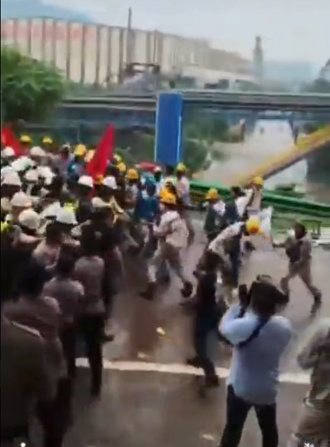
1. On February 12, a worker protest took place at PT CSP within the IMIP Industrial Park. During the demonstration, protesting workers were reportedly assaulted by security personnel. One of the victims was an employee of PT CSP and also a union member.
The protest was triggered by disputes over the company’s employee shuttle bus transportation policy. Workers opposed a ban on the use of open-bed trucks for commuting, arguing that the shuttle bus service was insufficient and resulted in excessively long waiting times.
2. On February 4 and 5, for two consecutive days, the Indonesian Save Sagea Alliance and the Sagea Kiya Mothers’ Alliance blockaded a Chinese-invested mining site.
The blockade targeted PT Zong Hai Rare Metal Mining, which is managed by PT Mining Abadi Indonesia (MAI). The mine is located in Sagea Village, North Weda District, Central Halmahera Regency (commonly referred to as “Little K Island”). The company’s nickel mining activities have been alleged to be illegal and have frequently sparked local protests and land disputes.
Notably, women were at the forefront of the protest actions.
3. Another overseas labor dispute involving a Chinese-invested enterprise has been reported.
In Tajikistan, miners staged a rare collective protest over wages that have reportedly not increased for years and over alleged significant pay disparities between local employees and Chinese staff. The miners stated that their monthly salaries, ranging from approximately 2,000 to 4,000 somoni, are insufficient to cope with the rising cost of living.
The company reportedly refused to raise base wages, instead proposing to introduce holiday bonuses starting in 2026. However, workers view this measure as inadequate to address their financial pressures.
3. According to a January 7 report by Cambodia China Times (Jiandanwang), approximately 2,300 workers at the YJC shoe factory in Cambodia staged a collective strike and blocked National Road 3, causing traffic congestion for several hours.
Workers’ demands reportedly included allegations that a Chinese supervisor had verbally abused and discriminated against Cambodian workers, that the company failed to legally distribute year-end bonuses, and that workers were not permitted to take leave on “January 7 Victory Day” as provided by law.
Officials from the Ministry of Labor have since intervened to mediate the dispute and are currently engaged in negotiations with company management and worker representatives.
4. Tensions have escalated between nickel mining company PT Raihan Catur Putra (RCP) and local residents in Morowali, Indonesia, over a land dispute. The company’s office building was set on fire, and environmental activists and journalists involved in the incident were reportedly arrested.
Sequence of events:
- January 3, 2026 (Saturday evening): Police (Polres Morowali) arrested 24-year-old environmental activist Arlan Dahrin at a disputed farmland site in Desa Torete, Bungku Pesisir District. Local residents consider the land to be their agricultural property, while PT RCP claims it falls within its mining permit (IUP) concession area, resulting in a land conflict.
- Arlan Dahrin had long supported local residents in addressing agrarian disputes with the company and was regarded as an advocate for environmental and land rights.
- Police accused Arlan of racial and ethnic discrimination (diskriminasi ras dan etnis), stating that he had failed to respond to two prior summonses and that sufficient evidence and expert opinions supported the arrest. Authorities emphasized that the arrest was conducted in accordance with legal procedures.
- News of the arrest sparked anger among local residents, who viewed it as unjust and possibly influenced by the company. Prior to the arrest, company security personnel had reportedly filmed Arlan’s activities at the site.
- Residents blocked roads and protested outside the police station. Subsequently, a group of demonstrators—including women and men carrying bamboo torches—marched to the PT RCP office and set it on fire. The semi-permanent structure was quickly engulfed in flames.
The incident has heightened security tensions in the Morowali area.
6. Nationwide protests in Iran have entered their seventh day, with multiple labor organizations—including teachers’ unions, the Free Union of Iranian Workers, and the Syndicate of Workers of Tehran and Suburbs Bus Company—expressing support for large-scale strikes and demonstrations.
On December 28, 2025, Iranian merchants and bazaar traders protested soaring food prices driven by currency depreciation. On December 31, students joined the demonstrations, calling for political reform. By January 2, 2026, protests had spread to the Shiite holy city of Mashhad, where demonstrators reportedly chanted slogans opposing support for Gaza and Lebanon and calling for the resignation of the country’s leadership, directing frustration toward worsening economic conditions and declining living standards.
Iran is a significant partner country under the Belt and Road Initiative, with Chinese enterprises deeply involved in infrastructure, energy, and manufacturing sectors. The rapidly evolving domestic situation has introduced new uncertainties regarding the future of Belt and Road projects in Iran.
Violence Incidents
1. On February 6, 2026, a serious violent crime was reported in Mesuji Regency, Lampung Province, Indonesia. A female content creator was allegedly lured into her rented accommodation by two men who claimed they needed to repair water pipes. Once inside, the suspects reportedly committed robbery and sexual assault.
During the attack—amid strangulation, threats, and assault—the victim reportedly pretended to lose consciousness, leading the suspects to believe she had died. While they were attempting to dispose of her, she seized an opportunity to escape and call for help. Police later arrested the two suspects.
For colleagues working and living abroad, personal safety must remain a top priority. Please consider the following precautions:
- Verify before opening doors: Even if someone claims to be a landlord, maintenance worker, or staff member, confirm their identity through the landlord, company, or official channels before allowing entry.
- Avoid isolated encounters: Do not remain alone with strangers in enclosed spaces. If a visit is unavoidable, ensure someone else is present or keep doors and windows open.
- Stay alert: If you sense anything unusual, disengage immediately and contact local authorities, colleagues, or your embassy/consulate.
- Prepare for emergencies: Memorize local emergency numbers, keep communication devices accessible, and familiarize yourself with nearby neighbors and the security environment.
- Respect local security realities: In areas with complex security conditions, take extra verification steps and do not lower your guard, even with seemingly familiar faces.
When working overseas, always prioritize personal safety. In any emergency, focus first on protecting yourself and seek help immediately.
2. Kolaka, Indonesia: Conflicts involving Chinese-invested enterprises in the nickel mining sector continue to emerge.
3. On December 25, at the Phase 9 construction site (IMIP9) of the Morowali Tsingshan Industrial Park in Indonesia, an Indonesian worker assaulted a Chinese engineering manager.
We call on the Tsingshan Industrial Park to safeguard the rights and personal safety of Chinese workers.
4. Reports indicate that at Indonesia’s IPIP Industrial Park, local Indonesian workers violently kicked and struck the door of an office used by Chinese workers, with several individuals reportedly holding sticks. The situation was described as highly volatile and on the verge of escalation.
The incident reportedly followed a verbal and physical altercation between Chinese and Indonesian nickel miners at the site. Although the situation has temporarily calmed, Chinese workers still inside the park have reportedly said that they “don’t even dare to go out to use the restroom” and remain concerned about their personal safety.
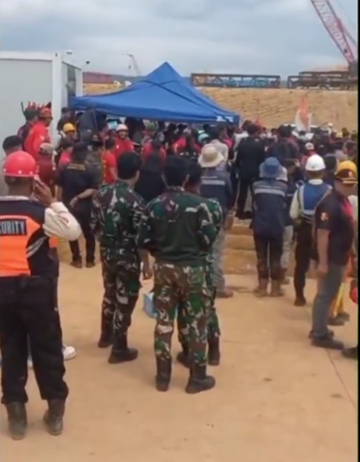
5. Video footage circulating from the time of the clash shows workers scattering and running amid chaotic scenes.
Chinese nationals working in Indonesia are advised to remain vigilant and prioritize personal safety, especially given the recent increase in reported conflicts.
6. On January 28, clashes broke out between Chinese and Indonesian nickel mine workers at the Indonesia Pomalaa Industry Park (IPIP) in Pomalaa, Kolaka Regency, Southeast Sulawesi.
According to reports, the incident began when an Indonesian worker raised questions about wages. A verbal dispute with a Chinese supervisor escalated into a physical altercation, which then triggered broader retaliatory actions by Indonesian workers against Chinese workers inside the park.
IPIP (Indonesia Pomalaa Industry Park) is a large industrial complex operated by Huayou Cobalt in Pomalaa, Kolaka, Southeast Sulawesi. It is designated as a national strategic project of Indonesia and is built around the region’s abundant nickel and cobalt resources. The project promotes a vision of transforming “black metals” into a “green miracle” through downstream processing and industrial upgrading.
Construction began in 2022. However, land disputes remain unresolved, while environmental concerns and labor conflicts have continued to surface. These accumulating tensions have led observers to describe the park as a “ticking time bomb” within Indonesia’s laterite nickel industrial chain.
7. Armed “bandit” groups in Nigeria have long carried out kidnappings for ransom and attacks on villages, particularly in the northern and central regions. Recent reports suggest that some northern militant groups may be targeting Chinese nationals for abduction, raising security concerns. As a result, certain Chinese-invested construction sites have reportedly suspended operations, disrupting normal production activities.
On the 19th, in Kaduna State in northern Nigeria, two churches were attacked by armed assailants during Monday services. At least 163 Christian worshippers were reportedly abducted.
A video circulating online shows a Chinese construction site in Nigeria gradually resuming work. Workers in Nigeria are advised to remain vigilant, prioritize personal safety, and take necessary precautions to protect themselves.
8. Seven people were killed, including one Chinese national, in a bombing at a Chinese restaurant in Kabul, Afghanistan. The extremist group Islamic State (ISIL/ISIS) claimed responsibility for the attack.
ISIL stated that a suicide bomber entered the restaurant—known to be frequented by Chinese nationals—and detonated explosives. The group linked the attack to its claims regarding the Chinese government’s policies toward Uyghurs and threatened to continue targeting Chinese citizens in Afghanistan.
In recent years, following the Taliban’s return to power, Chinese personnel and commercial activities in Afghanistan have reportedly increased. However, security risks in the country remain high.

9. On January 14 at around 7:00 p.m., in Prato, Italy, a 59-year-old Chinese man was reportedly assaulted by several individuals outside a supermarket on Via Guido de Ruggiero.
Video footage circulating online, in which Wenzhou dialect can be heard, suggests that the man was attacked by seven or eight Pakistani individuals and may have been robbed. The victim was knocked to the ground and was reportedly unable to get up. Emergency responders (118) arrived at the scene to provide medical assistance, and police responded shortly thereafter to handle the incident.
Some online commentary has speculated that the attack may be linked to prior labor disputes, with claims that certain Chinese companies stopped hiring Pakistani workers after strike actions, allegedly leading to retaliatory robberies. However, such claims remain unverified.
10. A Chinese national was shot during a carjacking robbery in Bolivia, prompting a safety advisory from the Chinese Embassy in Bolivia.
On the afternoon of December 18 (local time), in La Paz, the capital of Bolivia, a male Chinese citizen was reportedly stopped by several masked and armed assailants and robbed. During the incident, he was shot in the leg.
The victim was taken to hospital for treatment and is now out of danger. A significant amount of cash and valuables he was carrying were stolen. The case remains under investigation.
11. Indonesia’s military is investigating an incident involving 15 Chinese nationals accused of assaulting soldiers.
On December 14, 2025, a confrontation occurred in West Kalimantan Province after 15 Chinese citizens were allegedly operating drones in a restricted military area. According to reports, when confronted by soldiers, the individuals were said to have attacked them using machetes and air guns.
The clash resulted in significant damage to vehicles. To prevent further escalation, the soldiers reportedly withdrew from the scene. No casualties were reported. The case is currently under joint investigation by military and police authorities.
12. An armed group in Kenya attacked a residence used by Chinese construction workers, prompting police intervention. No Chinese nationals were reported injured.
The incident occurred at approximately 1:00 a.m. on the 16th, when around 50 armed assailants forcibly entered the compound of a Chinese contractor located about one kilometer from Elwak Police Station. A fierce exchange of gunfire broke out between the attackers and police officers on duty.
According to police statements, the assailants used a mix of improvised and standard firearms and damaged the camp’s main gate and surrounding security facilities. Investigations are ongoing.
13. In the early hours of December 16, 2025, Kenyan police successfully foiled an armed attack allegedly planned by the Somali militant group Al-Shabaab targeting Chinese workers.
The incident occurred in Elwak, a town in northeastern Kenya near the Somali border. A heavily guarded compound housing Chinese road construction workers was attacked at night by multiple armed assailants. The attackers damaged the compound’s gate and perimeter fencing, vandalized police vehicles and several engineering vehicles, and engaged in a prolonged exchange of gunfire with security forces.
Following the firefight, the assailants retreated. All 10 Chinese workers were rescued, and no casualties were reported.
14. In the early hours of December 9, 2025, a Chinese construction worker employed by China Civil Engineering Construction Corporation (CCECC) was the victim of an attempted robbery and violent assault at the Kolofe camp in northern Malaita Province, Solomon Islands.
The worker was attacked and injured by an unidentified assailant armed with a knife while walking to a restroom near the dormitory. He was subsequently transported to the Malu’u Area Health Center for emergency medical treatment.
15. The kidnapping case involving Chinese influencer “Lan Zhanfei” in South Africa has drawn renewed attention, while the Chinese Embassy in Qatar has denied rumors of a suspect’s surrender.
On December 9, Lan Zhanfei posted online claiming he had been kidnapped in South Africa. He alleged that the perpetrators had planned the crime for six months, bribed staff to obtain his travel itinerary, and entered his room at night to abduct him and demand money. Chinese diplomatic missions in South Africa confirmed that the case was genuine, that Lan had safely departed South Africa, and that the matter is under investigation by local police.
On December 10, an individual claiming to be one of the perpetrators posted in a fan group, stating that he had demanded RMB 1.088 million due to debt pressures and had surrendered to the Chinese Embassy in Qatar. That evening, the embassy responded that it had no record of such a surrender and that no individual matching the description had turned themselves in.
Details of the case remain disputed, and investigations are ongoing.
16. In late November 2025, two cross-border armed attacks occurred within four days in a border area of Tajikistan near Afghanistan, resulting in the deaths of at least five Chinese workers. The incidents suggest that security risks may be spreading beyond the traditionally volatile Pakistan–Afghanistan border region into parts of Central Asia.
Experts noted that this marks the second fatal incident involving Chinese nationals in Tajikistan within a year. The attacks are believed to be linked to retaliation by Afghan-based drug trafficking groups against anti-smuggling efforts supported by China.
Relations between Tajikistan and the Taliban authorities have already been strained, and the fact that the attacks were reportedly launched from the Afghan side of the border could further complicate the situation. Although international actors have invested in border infrastructure and security, local defense capabilities remain limited due to corruption and funding shortages.
In the short term, the incidents are not expected to trigger widespread instability. However, if such attacks continue, China may increase diplomatic pressure and adjust its security posture and risk management strategies in Central Asia.
17. An armed group recently attacked a BUA road construction site in Kwara State, Nigeria, abducting two Chinese workers. Police have launched a rescue operation, and as of the latest reports, no ransom demand has been received.
The two Chinese nationals were involved in the multi-billion-naira BUA Bode Saadu–Kaiama–Kosubosu road project. The attack occurred in the Bode Saadu area of Moro Local Government Area. According to local residents, gunmen stormed the construction site and opened fire before taking the two victims into a nearby forest.
At the time of the incident, the workers were operating near Eji Dongari town. Residents reported that the sudden gunfire caused widespread panic in surrounding communities. As of Sunday, the kidnappers had not made any contact to demand ransom.
Kwara State Commissioner of Police Adekimi Ojo confirmed the kidnapping and stated that security forces have been deployed and are working “around the clock” to secure the release of the victims. He also urged members of the public to provide credible information to assist authorities in addressing the growing banditry threat in the region.
Working Conditions
1. At a Chinese-invested construction site in the Democratic Republic of the Congo, as the Lunar New Year approaches, workers have reportedly been granted only one and a half days of leave—far from enough to reunite with their families.
Being overseas, many workers say they have little choice but to internalize their emotions. Speaking out often feels unlikely to change the outcome. Yet people are not machines—no matter how resilient they are, they still need time to rest, reconnect, and breathe.
2. At a construction site in Israel, migrant workers reportedly have no tables to eat at and no proper beds to sleep on—two pieces of foam board pushed together serve as a makeshift mattress.
For those working overseas, living conditions and adequate rest should never be treated as minor issues. Work can be demanding, but it should not come at the cost of basic dignity and health.

3. An African worker joked, “Working at Chinese construction sites is exhausting. We have to work overtime every day. But the project manager says if you can’t even handle this bit of hardship, you definitely won’t make it anywhere else.”
It sounds all too familiar—the same rhetoric, the same tone. It seems that a certain style of high-pressure workplace culture has successfully “gone global” and made its way to Africa as well.
4. A netizen shared that after going to Serbia for work, he regretted it in less than a month because of the harsh working conditions. He earned very little, yet had already spent a significant amount upfront—agency fees, visa costs, travel expenses, and living costs. The hardship was real, but the income did not match the expectations. Friends who are working overseas, have you encountered similar issues? You can share some experience and help your fellow overseas workers.
5. Reports have surfaced that in Paya Lebar, Singapore, a company has allegedly been housing more than a dozen employees inside a warehouse unit within an industrial building.
According to the complaint, workers were made to sleep on metal racks, using only a piece of cloth as a curtain for minimal privacy. Sleeping, cooking, and laundry were all reportedly carried out inside the warehouse space.
6. Meal vouchers have appeared at a Belt and Road project site in Kyrgyzstan in 2026. As China expands internationally, some workers feel their living conditions resemble those of China’s planned economy era. Is this also a form of “cultural export”? Will ration coupons for grain, cloth, oil—or even radishes—make a comeback as well?
7. In Kyrgyzstan at the start of 2026, Chinese workers on a foreign aid construction project reportedly saw no improvement in their meals for the New Year. They described moldy rice and spoiled vegetables, with meals consisting mostly of onions, potatoes, radishes, and tofu. Meanwhile, project bosses and managers were said to have separate, better-quality meals.
“Better to give to foreign friends than to one’s own servants.” Critics argue that such disparities are not isolated cases in overseas aid projects.
At the same time, in Eastern Europe, Chinese workers at Serbia’s National Stadium project were reportedly eating steamed buns “as hard as stones” while continuing heavy construction work.
8. Since 2018, when Zijin Mining acquired the Bor mining complex in Serbia for USD 1.26 billion, the once-declining mining town has undergone rapid transformation. Economically, previously stalled operations resumed, bringing renewed industrial activity. Local commerce expanded, employment increased, and urban infrastructure saw visible improvements.
However, labor and social tensions have also emerged. Trade unions report limited communication between Chinese and Serbian workers, while Chinese workers are described as working under strict management with little public visibility. Human rights organizations have raised concerns about alleged passport retention, excessive overtime, and opaque labor practices.
The most contentious issue remains environmental impact. Reports indicate that sulfur dioxide and arsenic emissions have repeatedly exceeded regulatory limits. Residents have complained about deteriorating air quality, rising health risks, and visible ecological degradation. Environmental groups argue that pollution control measures have not kept pace with production expansion.
At the national level, protests have erupted over corruption allegations and a perceived lack of transparency in resource agreements. Critics worry that Serbia’s mineral resources are being rapidly extracted without sufficient long-term safeguards or public accountability.
Bor has thus become a microcosm of the Belt and Road Initiative’s presence in the Balkans—where economic revitalization intersects with environmental concerns, labor disputes, and broader governance challenges.
9. Reports of serious abuse involving Indonesian crew members aboard the Chinese distant-water fishing vessel Longxin 629 have drawn international attention to seafarers’ rights and labor protections.
Indonesian crew members allege severe mistreatment, including working up to 18 hours per day with inadequate rest, unequal access to drinking water, prolonged wage arrears, and extremely low pay. Some reportedly worked for over a year and received only USD 120 in total compensation—far below the minimum wage standards set under the Maritime Labour Convention (MLC). There are also allegations that deaths occurring onboard were not properly reported to families in accordance with international requirements, raising serious human rights concerns.
Although China has ratified the MLC and introduced domestic regulations such as the Regulations on Seafarer Management, and has conducted training to strengthen protections, the incident suggests potential gaps in enforcement and oversight. Indonesia has also enacted laws in recent years to strengthen protections for migrant workers and seafarers. Nevertheless, abuse cases involving Indonesian crew members on vessels linked to mainland China, Taiwan, and Fiji continue to surface.
Because the vessel is subject to Chinese jurisdiction, China is being urged to conduct a thorough investigation and ensure accountability. The Indonesian government has reportedly raised the matter through diplomatic channels.
Experts have called for enhanced cooperation between China and Indonesia in maritime enforcement, information-sharing, and seafarer training to prevent similar incidents and ensure that working conditions and fundamental rights of seafarers are effectively protected.